Mensaje
Todas las plantillasHealthcare & Clinical
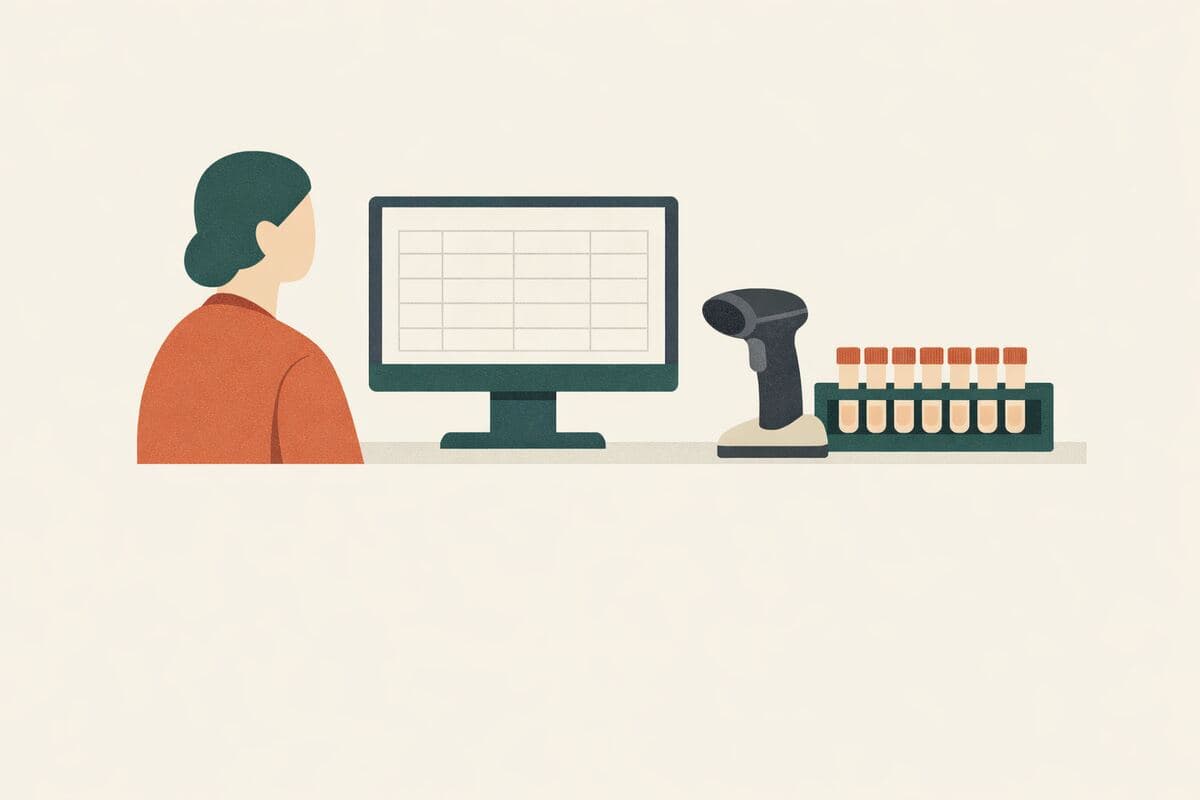
Evaluación de Usabilidad e Integridad de Datos del LIS
Evalúa la usabilidad del sistema de información del laboratorio, la exactitud de los datos y la eficiencia del flujo de trabajo para profesionales de laboratorio en biotecnología y atención médica, con base en la experiencia reciente de 30 a 90 días.
Pruébalo sin registrarte · Respuestas ilimitadas en el plan gratuito
Vista previa en vivo
Evaluación de Usabilidad e Integridad de Datos del LIS
Bienvenido/a a la Evaluación de Usabilidad e Integridad de Datos del LIS. Esta encuesta pregunta sobre su experiencia reciente con su Sistema de Información del Laboratorio principal. Completarla debería tomar aproximadamente entre 8 y 10 minutos. Su participación es completamente voluntaria y puede detenerse en cualquier momento. No hay respuestas correctas o incorrectas: nos interesan sus opiniones honestas. Todas las respuestas son confidenciales y se informarán únicamente de forma agregada. Al continuar, indica su consentimiento para participar.
Powered by QuestionPunk
Tema Predeterminado. Puedes cambiar los colores y las fuentes.
Preguntas de ejemplo
Una vista previa del contenido de la plantilla. Todas las preguntas son editables antes de publicar.
28 preguntas · ~13 min
Q01
Opción múltiple
¿Ingresa o verifica directamente los resultados de las pruebas en el LIS?
- Sí
- No
Q02
Opción múltiple
¿Qué Sistema de Información del Laboratorio (LIS) utiliza principalmente?
- Epic Beaker
- Cerner PathNet
- Sunquest
- Orchard Harvest
- SoftLab (SCC)
- LabWare
- Sistema personalizado o interno
- No estoy seguro/a
- Otro (especifique)
Q03
Lista desplegable
¿Con qué frecuencia utiliza su LIS principal en su trabajo?
- Todo el día (la mayoría de las horas)
- Varias veces al día
- Aproximadamente una vez al día
- Algunas veces por semana
- Con menos frecuencia
Q04
Lista desplegable
¿Cuánto tiempo lleva usando este LIS principal?
- Menos de 3 meses
- 3–12 meses
- 1–3 años
- 3–5 años
- Más de 5 años
Q05
Opción múltiple
¿Qué sistemas están actualmente integrados con su LIS? Seleccione todos los que correspondan.
- EHR/EMR
- Interfaces de analizadores/instrumentos
- Middleware/automatización
- Facturación/finanzas
- Interfaces de laboratorio de referencia
- Informes/analítica/BI
- Inventario/suministros
- Herramientas de gestión de calidad (p. ej., CAP/CLIA)
- Ninguna de las anteriores
- No estoy seguro/a
- Otro (especifique)
Q06
Escala de opinión
En general, ¿qué tan fácil es usar su LIS principal para su trabajo diario?
Escala: 1 – 7
Mín:Muy difícilMáx:Muy fácil
Q07
Escala de opinión
Pensando en los últimos 30 días, ¿en qué medida está de acuerdo?: Navegar entre los módulos y las pantallas del LIS es sencillo.
Escala: 1 – 7
Mín:Totalmente en desacuerdoMáx:Totalmente de acuerdo
Q08
Escala de opinión
Pensando en los últimos 30 días, ¿en qué medida está de acuerdo?: Completar tareas rutinarias requiere una cantidad razonable de clics o pasos.
Escala: 1 – 7
Mín:Totalmente en desacuerdoMáx:Totalmente de acuerdo
Q09
Escala de opinión
Pensando en los últimos 30 días, ¿en qué medida está de acuerdo?: Los mensajes de error me ayudan claramente a entender qué salió mal y cómo corregirlo.
Escala: 1 – 7
Mín:Totalmente en desacuerdoMáx:Totalmente de acuerdo
Q10
Escala de opinión
Pensando en los últimos 30 días, ¿en qué medida está de acuerdo?: El diseño de la interfaz del LIS es intuitivo y está bien organizado.
Escala: 1 – 7
Mín:Totalmente en desacuerdoMáx:Totalmente de acuerdo
Q11
Escala de opinión
En general, ¿qué tan satisfecho/a está con la usabilidad de su LIS principal?
Escala: 1 – 7
Mín:Muy insatisfecho/aMáx:Muy satisfecho/a
Q12
Opción múltiple
En los últimos 30 días, ¿qué tareas del LIS consumieron más tiempo? Seleccione todas las que correspondan.
- Entrada de pedidos
- Recepción de muestras
- Entrada/verificación de resultados de pruebas
- Correcciones/enmiendas de resultados
- Búsqueda de pacientes o resultados
- Documentación de control de calidad
- Gestión de listas de trabajo
- Generación de informes
- Resolución de problemas de la interfaz
- Otro (especifique)
Q13
Lista desplegable
En los últimos 30 días, ¿con qué frecuencia encontró errores de entrada de datos que requirieron corrección?
- Nunca
- Una vez en los últimos 30 días
- 2–3 veces en los últimos 30 días
- Aproximadamente una vez por semana
- Varias veces por semana
- A diario o casi a diario
Q14
Opción múltiple
En los últimos 90 días, ¿qué problemas de integridad de datos ha observado personalmente? Seleccione todos los que correspondan.
- Registros duplicados de pacientes o muestras
- Identificación o datos demográficos del paciente que no coinciden
- Etiquetado incorrecto de muestras detectado por el sistema
- Resultado sobrescrito o perdido
- Registro de auditoría incompleto para un cambio
- Fallo o retraso en la transmisión de la interfaz
- Discrepancia de rango de referencia o versión
- Ninguna de las anteriores
- Otro (especifique)
Q15
Escala de opinión
¿Qué tan seguro/a está de que los datos en su LIS principal son exactos y completos?
Escala: 1 – 7
Mín:Nada seguro/aMáx:Extremadamente seguro/a
Q16
Lista desplegable
Cuando fue necesario en los últimos 90 días, ¿qué tan fácil fue recuperar un registro de auditoría completo?
- Muy difícil
- Difícil
- Ni fácil ni difícil
- Fácil
- Muy fácil
- No aplica
Q17
Escala de opinión
¿En qué medida está de acuerdo?: Las reglas de validación del LIS previenen la mayoría de las entradas incorrectas o incompletas.
Escala: 1 – 7
Mín:Totalmente en desacuerdoMáx:Totalmente de acuerdo
Q18
Lista desplegable
¿Aproximadamente cuántas horas totales de inactividad no planificada del LIS ocurrieron en los últimos 90 días?
- 0 (sin inactividad no planificada)
- Menos de 1 hora
- 1–4 horas
- 5–8 horas
- 9–24 horas
- Más de 24 horas
- No estoy seguro/a
Q19
Lista desplegable
Durante las horas pico en los últimos 30 días, ¿con qué frecuencia el LIS se sintió notablemente lento?
- Nunca
- Una vez en los últimos 30 días
- 2–3 veces en los últimos 30 días
- Aproximadamente una vez por semana
- Varias veces por semana
- A diario o casi a diario
Q20
Escala de opinión
¿Cómo calificaría la capacitación que recibió sobre la entrada y el manejo precisos de datos en el LIS?
Escala: 1 – 7
Mín:Muy inadecuadaMáx:Más que adecuada
Q21
Escala de opinión
¿Qué tan satisfecho/a está con el soporte que recibe (del proveedor o interno) cuando encuentra problemas de datos en el LIS?
Escala: 1 – 7
Mín:Muy insatisfecho/aMáx:Muy satisfecho/a
Q22
Ordenación
Clasifique las siguientes posibles mejoras, de la más importante a la menos importante, para fortalecer la usabilidad del LIS y la integridad de datos.
- Mensajes de error más informativos
- Reglas de validación en tiempo real más sólidas
- Búsqueda y filtrado más rápidos
- Vistas/exportaciones de registro de auditoría más claras
- Mejores flujos de trabajo de inactividad y reversión
- Entrada y verificación de pedidos simplificadas
Arrastre para ordenar
Q23
Texto largo
Con base en sus respuestas en esta encuesta, comparta cualquier idea o sugerencia adicional sobre la usabilidad del LIS o la integridad de datos.
Q24
Entrevista con IA
Nos gustaría comprender mejor su experiencia con el LIS. Un moderador de IA le hará un par de breves preguntas de seguimiento basadas en sus respuestas anteriores.
Q25
Lista desplegable
¿Cuál es su función principal?
- Tecnólogo/a médico/MLS
- Supervisor/a o gerente de laboratorio
- Patólogo/a
- Especialista en LIS/TI o integración
- Calidad/Regulatorio
- Flebotomía/recepción de muestras
- Científico/a de investigación
- Otro
Q26
Lista desplegable
¿Cuál es su entorno de laboratorio principal?
- Hospital
- Centro médico académico
- Laboratorio independiente/de referencia
- Biotecnología/farmacéutica
- Laboratorio de salud pública
- Clínica/consultorio médico
- Otro
Q27
Lista desplegable
¿Cuántos años de experiencia total tiene trabajando en entornos de laboratorio?
- Menos de 1 año
- 1–3 años
- 3–5 años
- 5–10 años
- Más de 10 años
Q28
Lista desplegable
¿Cuál es su turno de trabajo principal?
- Diurno
- Vespertino
- Nocturno
- Rotativo
- Varía/No aplica
Mensaje
Gracias por completar esta encuesta. Sus comentarios contribuirán directamente a mejorar la usabilidad del LIS y las prácticas de integridad de datos. Ahora puede cerrar esta ventana.
Qué incluye
Seguimientos con IA
Preguntas adaptativas sobre las respuestas abiertas que sacan detalles que un formulario estático pasaría por alto.
Controles de atención
Protecciones integradas frente a respuestas apresuradas y participantes de baja calidad.
Textos redactados por IA
Redacción, orden y ramificaciones escritos por la IA, ajustados a su objetivo de investigación.
Informe automático
Los temas, las citas y un resumen en lenguaje claro se escriben solos en cuanto llegan las respuestas.
Cómo se compara
Revisamos las plantillas más parecidas de otras herramientas de encuestas. Esto es lo que hacen bien, y dónde esta plantilla va más lejos.
Por qué esta plantilla
- Pairs standardized usability agreement statements (navigation, routine task completion, error message clarity, interface satisfaction) with LIS-specific data integrity items like audit trail retrieval, validation rule effectiveness, and unplanned downtime — content generic usability templates don't cover
- Includes an AI follow-up interview so respondents can elaborate on the specific integrity issues or time-consuming tasks they flagged, adding qualitative depth without a separate study
- Captures role, lab setting, years of experience, and shift alongside compliance-relevant questions, letting quality and IT teams segment findings by who is affected and where
- Closes with a ranked improvement-priorities question, open-text reflection, and an auto-generated report, so findings on both usability and data accuracy are ready to act on immediately
QuestionPro
System Usability Scale Survey TemplateA fielding-ready implementation of the standard System Usability Scale (SUS), generic to any software product rather than laboratory systems specifically. Useful if a lab team wants a quick, benchmarked usability score but not built to probe LIS-specific concerns like data integrity, validation rules, or downtime.
Qué hace bien
- Based on the well-established, benchmarked SUS methodology
- Quick to deploy for a general usability snapshot
- Familiar format for teams wanting comparability across tools/products
Dónde se queda corta
- Not tailored to laboratory information systems or data integrity/compliance concerns
- Static question set with no adaptive follow-up probing into flagged pain points
- No automated per-response quality scoring or AI-generated report
SurveySparrow
Laboratory Competency Assessment Form TemplateTargets healthcare lab staff like our template, but focuses on assessing individual competency/skills rather than LIS usability or data integrity. It's a static, conversational-style form, not an adaptive interview, and doesn't address system-level workflow or data quality issues.
Qué hace bien
- Audience-appropriate for laboratory/healthcare professionals
- SurveySparrow's conversational form style may improve completion rates
- Structured for competency/skills evaluation use cases
Dónde se queda corta
- Does not evaluate LIS usability, data accuracy, or workflow efficiency
- No adaptive AI follow-up or voice interview option to explore individual responses
- No published methodology for scoring or transparent prompt logic
Typeform
System Usability Survey TemplateA generic system usability survey with Typeform's polished conversational interface, applicable to any software but not written for laboratory information systems or regulatory data-integrity concerns. It's a fixed-question template rather than an adaptive interview tool.
Qué hace bien
- Clean, conversational one-question-at-a-time UI that may boost completion
- Simple to adapt wording for different software products
- Easy to launch quickly with minimal setup
Dónde se queda corta
- No LIS-specific or data integrity content (audit trails, validation rules, downtime)
- Static form with no adaptive or voice AI follow-up interviewing
- No automated quality scoring or auto-generated analytical report
Preguntas frecuentes
¿Qué preguntas incluye la plantilla «Evaluación de Usabilidad e Integridad de Datos del LIS»?
La plantilla incluye 28 preguntas listas para usar, empezando por: «¿Ingresa o verifica directamente los resultados de las pruebas en el LIS?» · «¿Qué Sistema de Información del Laboratorio (LIS) utiliza principalmente?» · «¿Con qué frecuencia utiliza su LIS principal en su trabajo?». El conjunto completo se muestra arriba y todas las preguntas son editables.
¿Cuánto se tarda en completar esta encuesta?
Los participantes suelen terminar las 28 preguntas en unos 13 minutos.
¿Puedo personalizar esta plantilla?
Sí: cada pregunta, cada opción de respuesta y el orden son editables antes de publicar. Puede añadir o quitar preguntas, o pedir al editor con IA que rehaga la encuesta en torno a su objetivo de investigación.
¿Esta plantilla es gratuita?
Sí. Ábrala en el editor y empiece a personalizarla ahora mismo: no necesita cuenta para probarla, y el plan gratuito cubre la publicación de su encuesta.
¿Listo para publicar?
Abra esta plantilla en el editor. Todo es suyo para cambiarlo antes de que lo vea el primer participante.
Plantillas relacionadas
Más estudios sobre temas similares.