Mensagem
Todos os modelosDeveloper & Engineering
Async Design Sprint (Google Ventures Method)
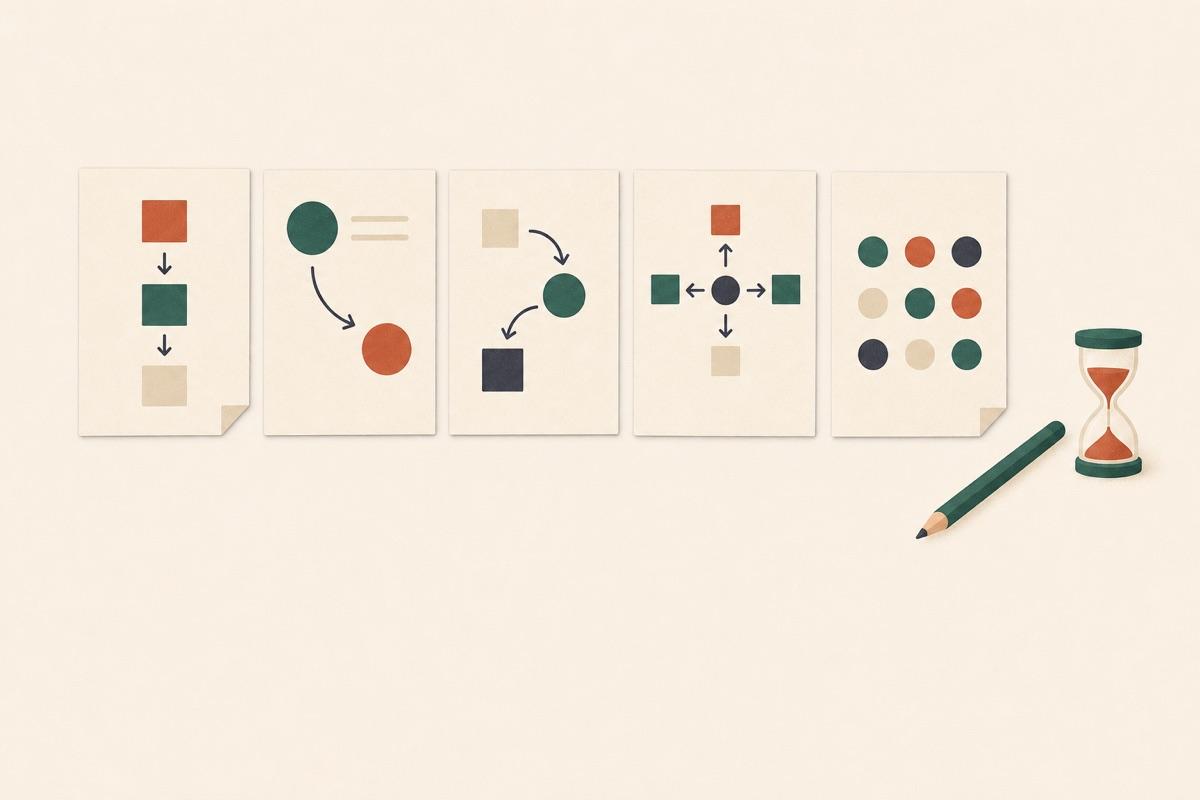
Run the five-day Google Ventures design sprint without a week of meetings. Pick a start day, and each morning the team gets that day's step: map the problem, sketch solutions on paper, vote on each other's sketches with a heat map, plan the prototype, then record what five customers did. The Decider casts the supervote, and the results page turns it all into a sprint brief.
Experimente sem cadastro · Respostas ilimitadas no plano gratuito
Prévia ao vivo
Async Design Sprint (Google Ventures Method)
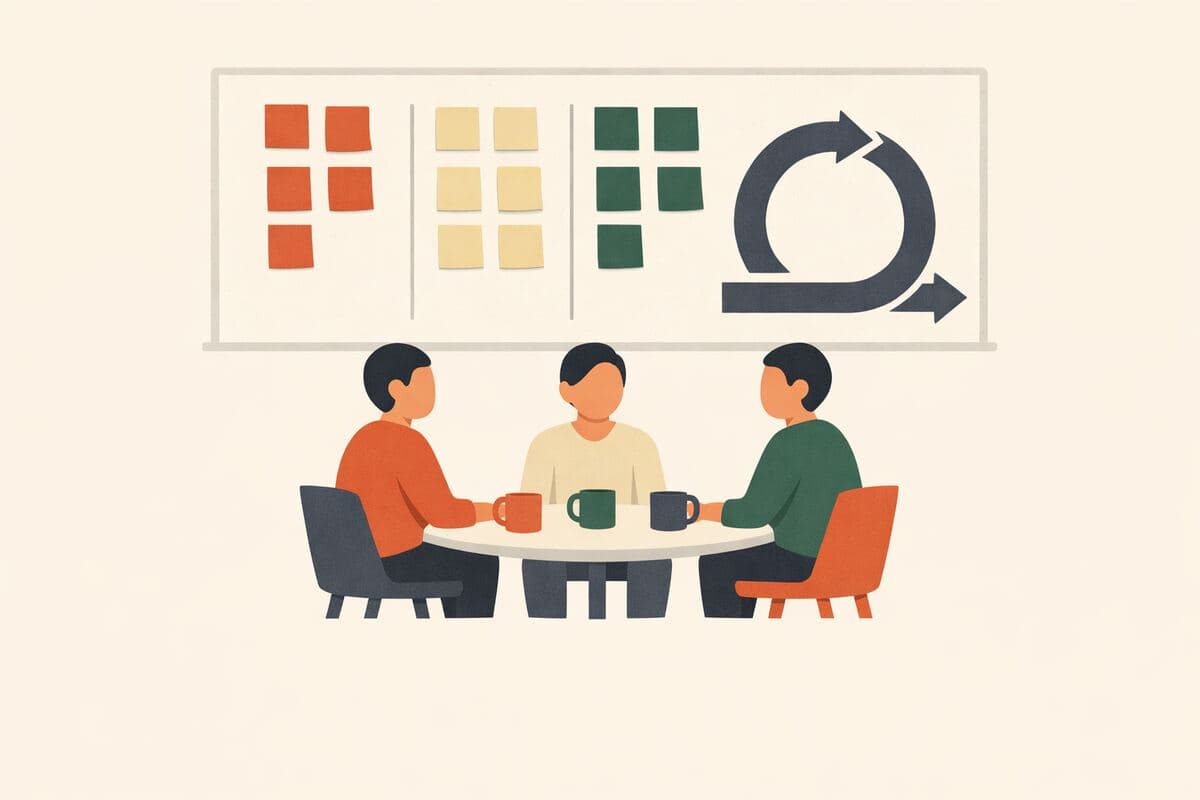
Welcome to the sprint. This week we'll go from a big problem to a tested prototype, one step a day, on your own time. Today we agree on the goal and map the problem. Answering takes about fifteen minutes; take longer on the map if you need it.
Powered by QuestionPunk
Tema Padrão. Você pode mudar as cores e as fontes.
Perguntas de exemplo
Uma prévia do que há no modelo. Todas as perguntas podem ser editadas antes de publicar.
21 perguntas · 5 dias · uma pesquisa curta por dia
Dia 1
Q01
Múltipla escolhaObrigatória
What's your role this week?
- Decider
- Facilitator
- Expert
- Team member
Q02
Texto longoObrigatória
Long-term goal: imagine it's two years from now and this project was a big success. What happened? Be optimistic.
Q03
Texto curtoObrigatória
Sprint questions: what could stop us from getting there? Turn each worry into a question that starts with "Can we…?", for example "Can we get people to trust us with their data?"
Q04
Pergunta
Ask the experts: if you know this problem well (customers, sales, support, the technology), record up to three minutes on what the rest of the team should know.
Q05
Texto longoObrigatória
Map: list the steps a customer takes, from first hearing about us to reaching the goal. One step per line.
Q06
Texto curtoObrigatória
How might we…? Write each opportunity you see as a note starting with "How might we", for example "How might we show the price before sign-up?"
Q07
Texto longoObrigatória
Target: which customer, and which step on the map, should this sprint focus on?
Mensagem
That's day 1 done. Tomorrow you'll sketch solutions on paper, so keep a pen and a few sheets handy.
Dia 2
Mensagem
Today everyone sketches alone, on paper. It doesn't need to be pretty: words and boxes are fine. Sketching takes about forty minutes; answering here takes about five. Your solution sketch is shown to the team without your name; only the facilitator sees who drew it.
Q01
Texto curtoObrigatória
Lightning demos: name a product (any industry) that solves a similar problem well, and the one idea worth borrowing from it.
Q02
Pergunta
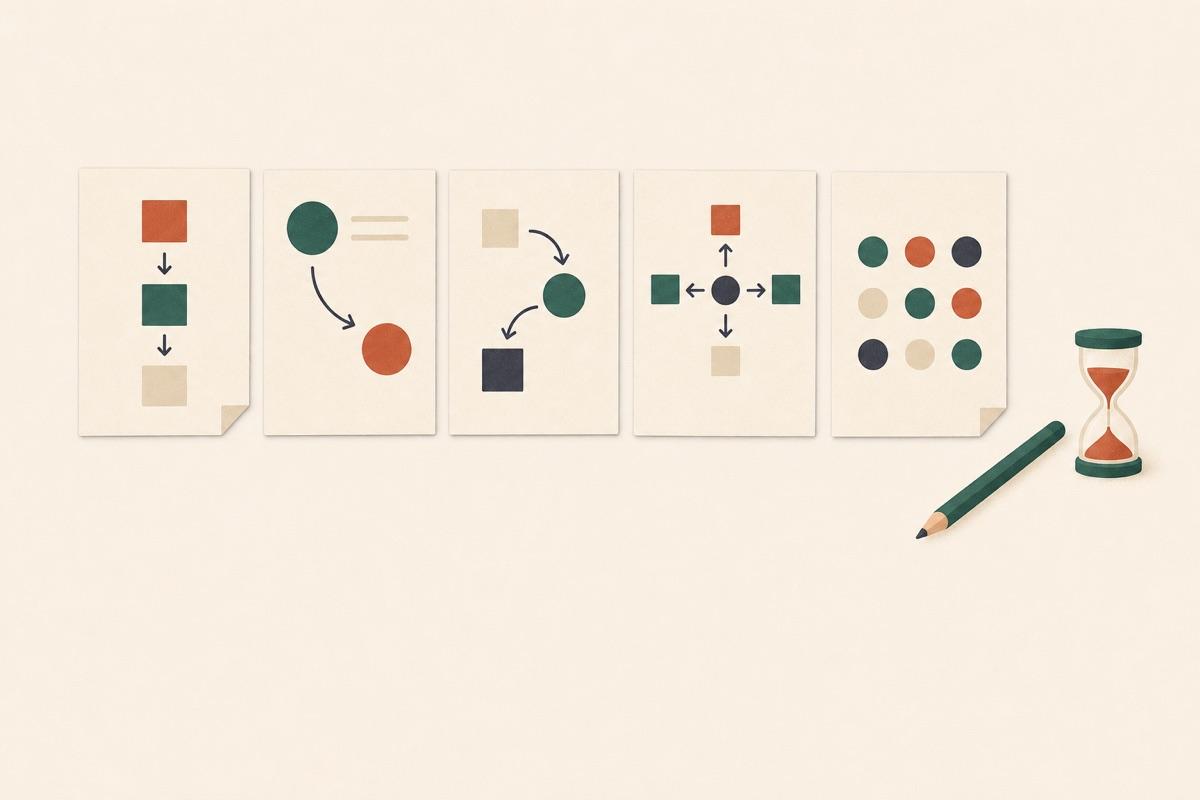
Crazy 8s: fold a sheet into eight panels and sketch eight variations of your best idea, one minute each. Upload a photo.
Q03
PerguntaObrigatória
Solution sketch: on one sheet, draw three panels showing what the customer sees and does, step by step. It should explain itself without you there. Upload a photo.
Q04
Texto curtoObrigatória
Give your solution sketch a short, catchy title.
Mensagem
Thanks! Tomorrow you'll see everyone's sketches and vote.
Dia 3
Mensagem
Today we pick the solution to prototype. Look at every sketch, drop dots on the parts you like, leave a note on anything unclear, then pick your favorite. About fifteen minutes.
Q01
Múltipla escolhaObrigatória
Are you the Decider for this sprint?
- Yes
- No
Q02
PerguntaObrigatória
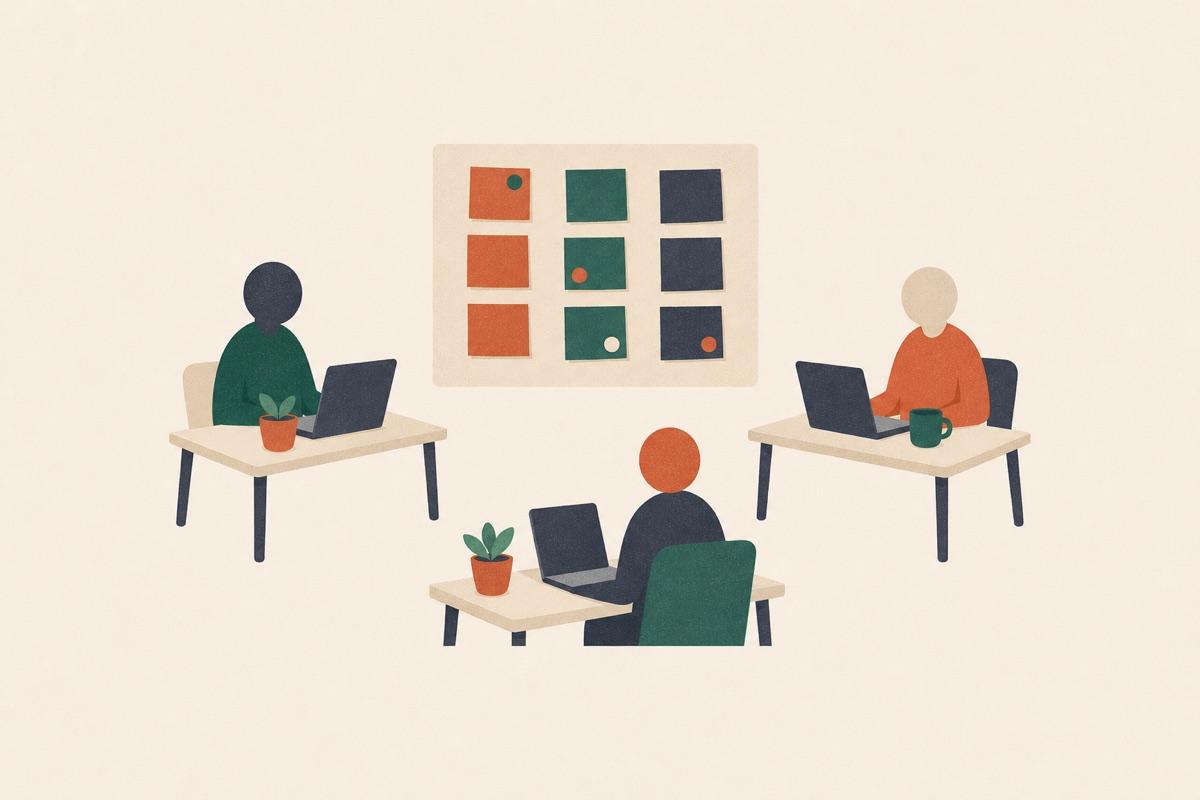
Heat map and straw poll: tap to drop a dot on every part of a sketch you like, add a note where something is unclear, then pick the one sketch you'd prototype.
Q03
Pergunta
Decider only: pick the sketch we'll prototype tomorrow. Everyone else, skip this one.
Q04
Texto longoObrigatória
Storyboard: in six to ten steps, what will the customer see and do in the prototype, starting from where they'd first meet it?
Mensagem
Decision made. Tomorrow we build a prototype that's just real enough to test.
Dia 4
Mensagem
Today we build a realistic-looking prototype of the storyboard. It only needs to work for the test. Answering takes about 5 minutes.
Q01
Múltipla escolhaObrigatória
Which part of the prototype are you taking on?
- Maker: builds the screens or pages
- Stitcher: joins the pieces together
- Writer: writes the real text
- Asset collector: finds images, icons and content
- Interviewer: prepares and runs the customer interviews
Q02
Texto curto
Link to the prototype or your part of it (Figma, Keynote, a web page), if you have one.
Q03
Texto longo
Interviewers: write the questions you'll ask, one for each sprint question from day 1.
Mensagem
Thanks! Tomorrow five customers try the prototype. Book them with a usability test or interview survey and share the link with the team.
Dia 5
Mensagem
Today five customers try the prototype. Watch the sessions, then record what you saw. About 10 minutes after the last session.
Q01
MatrizObrigatória
How did each customer react to the prototype?
5 linhas × 4 colunas
- Customer 1
- Customer 2
- Customer 3
- Customer 4
- Customer 5
Colunas: Positive · Mixed · Negative · Didn't watch
Q02
Texto longoObrigatória
Patterns: what did three or more customers do or say?
Q03
Entrevista com IA
Cada pessoa recebe perguntas de acompanhamento baseadas nas próprias respostas.
Objetivo da entrevista: Start from the sprint questions this respondent wrote on day 1, if you have them; otherwise ask which sprint question the customer sessions answered most clearly. For each, ask what the sessions showed: yes, no, or not clear yet, with a specific moment from a session as evidence. Anchor on the respondent's grid answers; if they rated a customer Negative, ask what that customer did right before things went wrong. End by asking what the team should do next week.
Mensagem
That's the sprint. Your answers go into the sprint brief: the goal, the winning sketch, and what the customers showed for each sprint question.
O que está incluído
Acompanhamento com IA
Sondagens adaptativas nas respostas abertas que revelam detalhes que um formulário estático deixaria passar.
Verificações de atenção
Proteções integradas contra respostas apressadas e participantes de baixa qualidade.
Textos escritos por IA
Redação, ordem e ramificações escritas pela IA, ajustadas ao seu objetivo de pesquisa.
Relatório automático
Temas, citações e um resumo em linguagem simples se escrevem sozinhos assim que as respostas chegam.
Perguntas frequentes
Quais perguntas estão no modelo “Async Design Sprint (Google Ventures Method)”?
O modelo inclui 21 perguntas prontas para usar, começando por: “What's your role this week?” · “Long-term goal: imagine it's two years from now and this project was a big success. What happened? Be optimistic.” · “Sprint questions: what could stop us from getting there? Turn each worry into a question that starts with "Can we…?", fo…”. O conjunto completo aparece acima e todas as perguntas podem ser editadas.
Posso personalizar este modelo?
Sim: cada pergunta, cada opção de resposta e a ordem podem ser editadas antes de publicar. Você pode adicionar ou remover perguntas, ou pedir ao editor com IA para refazer a pesquisa em torno do seu objetivo.
Este modelo é gratuito?
Sim. Abra no editor e comece a personalizar agora: não é preciso criar conta para testar, e o plano gratuito cobre a publicação da sua pesquisa.
Pronto para publicar?
Abra este modelo no editor. Tudo é seu para mudar antes de o primeiro participante ver.
Como se compara
Analisamos os modelos mais parecidos de outras ferramentas de pesquisa. Veja o que elas fazem bem e onde este modelo vai além.
Por que este modelo
- Five days, one short survey each morning: map, sketch, decide, prototype and test, so teammates answer on their own time
- Sketches are photos shown to teammates without names, and each teammate leaves heat-map dots and notes, a straw-poll pick and, for the Decider, a supervote
- The results show a sprint brief, and on Friday an AI interview asks each teammate what the customer sessions showed, free with no cap on responses, teams or question types
Miro
Official Remote 5-day Design SprintA board made by the authors of the Sprint book for remote design sprints, with one goal per day.
O que faz bem
- Made by Jake Knapp, John Zeratsky and Jackie Colburn for remote sprints
- One big goal per day: map, sketch, decide, prototype, test
Onde deixa a desejar
- A facilitator guides participants through each day
- The page doesn't mention anonymous sketches or async work
Mural
Official design sprint templateA five-day board with Map, Sketch, Decide, Prototype and Test columns, built for remote teams.
O que faz bem
- Made with Jake Knapp and John Zeratsky for remote teams
- Links a remote design sprint video and The Remote Design Sprint Guide
Onde deixa a desejar
- The page doesn't mention anonymous sketches, private voting or async work
Google Design Sprint Kit
Design Sprint KitGoogle's resource for planning and running a design sprint, with a five-phase framework and case studies.
O que faz bem
- Step-by-step tips for planning a sprint
- Links to sprint case studies
Onde deixa a desejar
- The pages describe guidance and case studies, not a way to collect teammates' sketches or votes
Modelos relacionados
Mais estudos sobre temas semelhantes.