Probabilistic Forecast & Estimation Survey
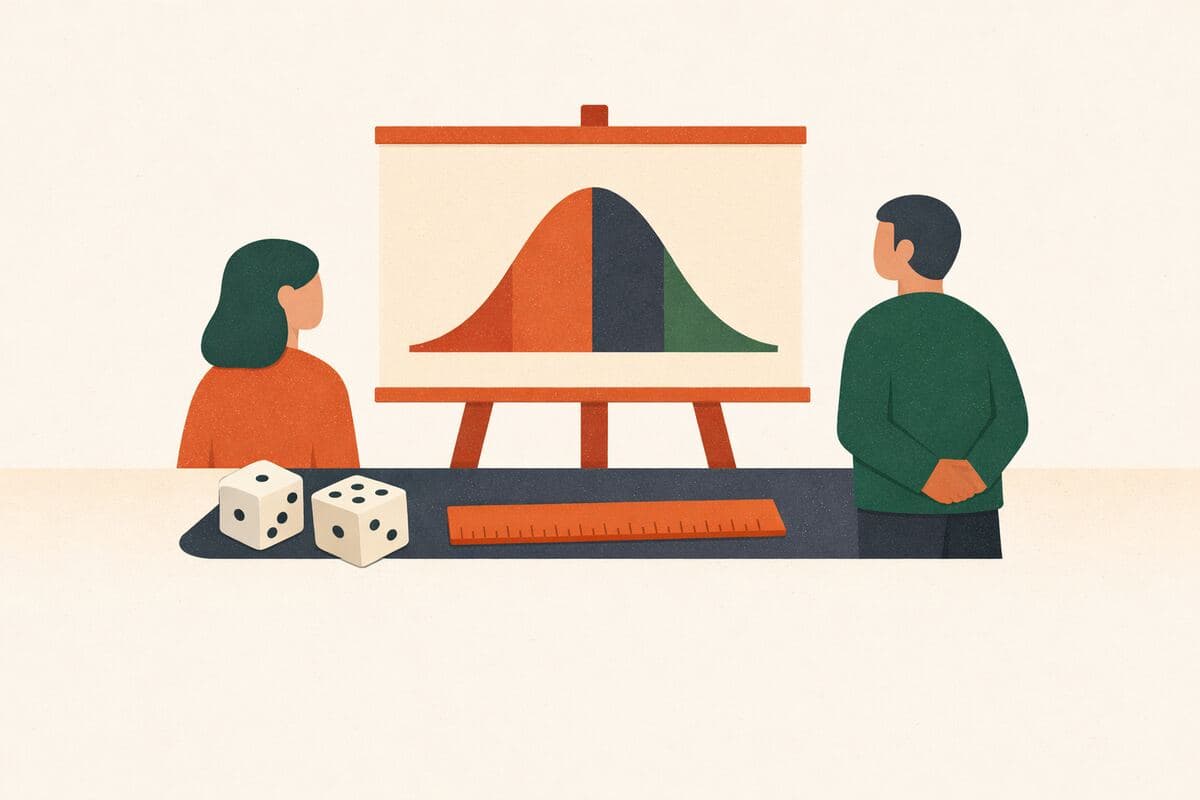
Replace single-point guesses with honest uncertainty: experts build a probability distribution over outcomes instead of naming one number, and the AI interviewer elicits the assumptions behind their shape. Ideal for sales forecasts, launch estimates, and planning reviews.
샘플 질문
템플릿에 포함된 내용을 미리 확인해 보세요. 모든 질문은 설문 공개 전에 자유롭게 수정할 수 있습니다.
How close are you to the thing being forecast?
- I own the number
- I contribute to it directly
- I observe it closely
- I'm an informed outsider
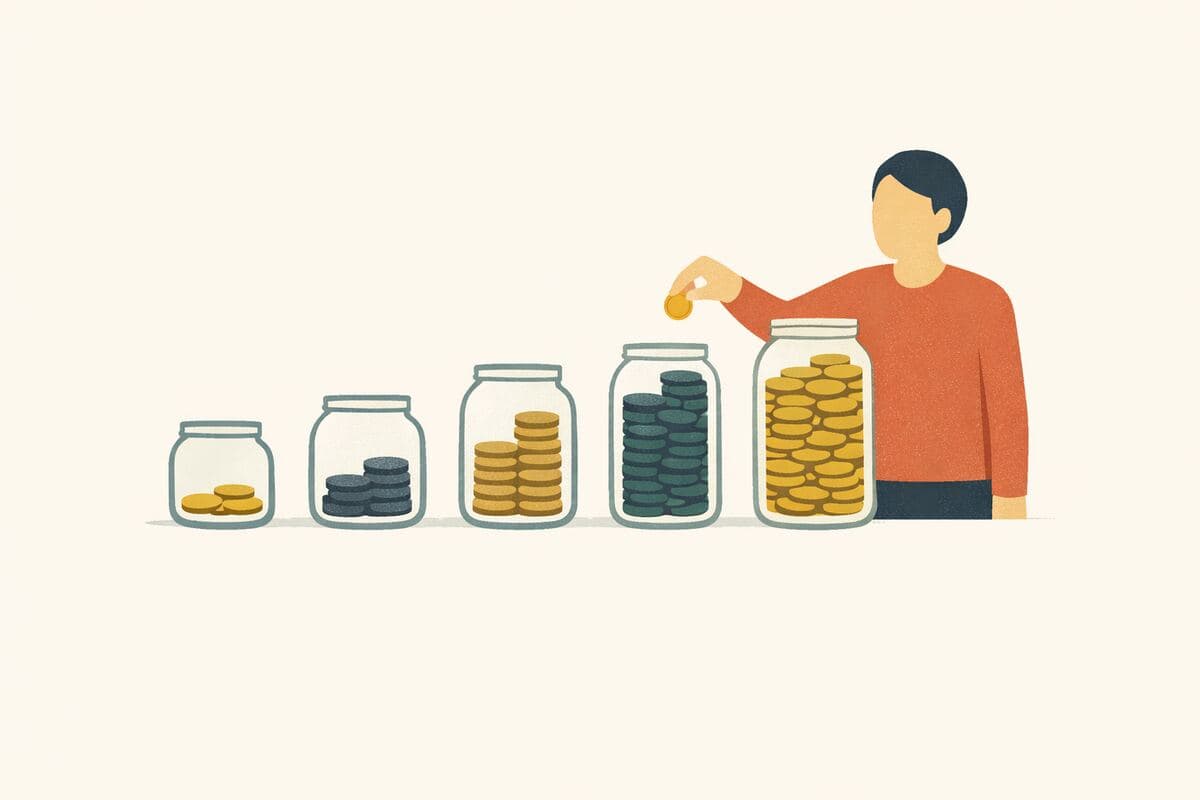
Distribute 20 chips across the outcome ranges to show how likely you think each is. More chips = more likely. (Template note: relabel the bins for your own metric before launching.)
How confident are you in your own forecast?
What is the single biggest factor that could push the outcome toward the LOW end?
And the single biggest factor that could push it HIGH?
Elicit the model behind the forecast: what base rate or history anchors their central estimate, which assumption they'd abandon first if early data disappointed, whether their tails reflect real scenarios or just hedging, and what leading indicator they would watch to know which way it's breaking. If their stated confidence and their distribution shape disagree, point at the gap and explore it.
Forecast submitted — thank you! Individual distributions aggregate into a crowd forecast, and the interviews document the assumptions worth monitoring.
포함된 기능
AI 후속 질문
정형화된 설문이 놓치는 세부 내용을, 주관식 답변에 맞춰 AI가 심층 질문으로 끌어냅니다.
주의력 확인 장치
성의 없는 답변과 저품질 응답자를 걸러내는 내장 안전장치입니다.
AI가 작성한 문안
문구, 질문 순서, 분기 로직까지 AI가 연구 목표에 맞춰 작성합니다.
자동 리포트
응답이 모이면 주요 주제, 인용문, 이해하기 쉬운 요약이 자동으로 작성됩니다.
다른 서비스와 비교
다른 설문 도구의 가장 유사한 템플릿을 검토했습니다. 그 도구들이 잘하는 점과, 이 템플릿이 한발 더 나아가는 지점을 정리했습니다.
이 템플릿을 선택하는 이유
- A native distribution builder elicits probability across outcome ranges — honest uncertainty instead of falsely precise point estimates
- Confidence calibration is checked against the distribution's actual shape, and mismatches get probed
- The AI interview documents each forecaster's assumptions and the leading indicator they'd watch — the inputs a planning review actually needs
- Aggregates individual distributions into a crowd forecast with the reasoning attached
SurveyMonkey
What is Purchase Intent And How To Measure ItMethodology resource (not a one-click template) that supplies the closest real analog to a forecasting/estimation study: purchase-intent questions that forecast demand, project inventory, and identify segments ready to buy within 3-12 months. Provides concrete Likert intent, timing, budget, 0-10 likelihood, and ranking questions plus a Purchase Intent Score formula. Strong elicitation examples, but a static questionnaire with no probabilistic or adaptive estimation.
잘하는 점
- Directly ties survey design to forecasting: demand projection, inventory, and purchase timing within 3-12 months
- Concrete question bank: Likert intent, timing multiple-choice, willingness-to-pay ranges, 0-10 likelihood-vs-competitor, brand ranking
- Defines a Purchase Intent Score (combining 'definitely' + 'probably will buy') as a summary metric
- Segments respondents by readiness/timeframe for planning
아쉬운 점
- Point-estimate self-reports with no calibration, confidence intervals, or probabilistic elicitation
- No adaptive AI follow-up to pressure-test an optimistic 'definitely will buy' response
- It's a methodology article, not a ready-to-field template or an auto-generated forecast report
- No mechanism to compare forecasts against realized behavior or to aggregate expert estimates
QuestionPro
Top 7 Product Concept Test Survey Questions + Sample Questionnaire TemplateA fielding-ready concept-test template that doubles as demand estimation before launch: it captures buying interest on a five-point interested-to-not-interested scale, expected price point, feature importance, favorability, and usage frequency. Good for gauging pre-launch appeal and expected price, but the estimation is a single stated-intent snapshot with no adaptive probing or forecast synthesis.
잘하는 점
- Ready-to-field template with a direct purchase-interest question (five-point interested-to-not scale)
- Elicits an expected price point respondents would pay, supporting revenue estimation
- Combines feature-importance (1-5) and favorability (Poor-Excellent) with usage-frequency questions
- Frames the survey explicitly as testing a concept before market launch
아쉬운 점
- Stated purchase interest is a single snapshot with no calibration or probability weighting
- No adaptive AI follow-up to probe why interest is low or what would raise it
- No native constant-sum to force feature/price trade-offs behind the estimate
- Interpretation and any demand projection are left to the analyst; no auto-report
자주 묻는 질문
“Probabilistic Forecast & Estimation Survey” 템플릿에는 어떤 질문이 포함되어 있나요?
바로 사용할 수 있는 질문 8개가 포함되어 있으며, 처음 질문은 다음과 같습니다: “This is a forecasting exercise — but instead of asking for one number, we'll ask how you'd spread your confidence across…” · “How close are you to the thing being forecast?” · “Distribute 20 chips across the outcome ranges to show how likely you think each is. More chips = more likely. (Template…”. 전체 질문은 위에서 미리 볼 수 있고 모두 수정 가능합니다.
이 설문을 완료하는 데 얼마나 걸리나요?
응답자는 보통 질문 8개를 약 5분 안에 완료합니다.
템플릿을 수정할 수 있나요?
네. 설문을 공개하기 전에 모든 질문, 답변 옵션, 순서를 자유롭게 수정할 수 있습니다. 질문을 추가·삭제하거나 AI 편집기에 연구 목표에 맞춘 재구성을 요청할 수도 있습니다.
이 템플릿은 무료인가요?
네. 편집기에서 바로 열어 수정을 시작할 수 있습니다. 체험에는 계정이 필요 없으며, 무료 플랜으로 설문을 공개할 수 있습니다.
설문을 공개할 준비가 되셨나요?
이 템플릿을 편집기에서 열어 보세요. 첫 응답자가 보기 전에 모든 부분을 원하는 대로 바꿀 수 있습니다.
관련 템플릿
비슷한 주제의 다른 설문을 만나 보세요.
Budget Allocation & Priority Trade-Off Survey
Give stakeholders 100 points and make them spend it: constant-sum allocation across initiatives forces the prioritization that agree-scale surveys hide. Follow-up questions capture what they'd cut entirely, and the AI interviewer pressure-tests their biggest bet.
템플릿 보기Forecast Confidence & Scenario Planning Assessment
Assesses team confidence in operational forecast accuracy, input quality, and scenario planning practices across functions. Designed for cross-functional teams to identify forecasting gaps, process bottlenecks, and planning improvement priorities.
템플릿 보기Annual Planning Priorities, Risks, and Bold Bets Survey
Collects input from every level of the organization on top priorities, resourcing tradeoffs, biggest risks, and the bold bets people would make for next year. An AI follow-up presses into the reasoning, blockers, and resources behind each person's proposed bet, so planning starts with real signal instead of guesses.
템플릿 보기AI Agent Output Review Burden and Trust Calibration Survey
Measures how much time and cognitive effort employees spend checking AI agent outputs, where trust is over- or under-calibrated, and what triggers a full manual re-check. An AI follow-up probes the last time output was wrong or nearly acted on unchecked.
템플릿 보기스타트업 가정 확신도 평가
스타트업 창업자가 고객, 문제, 채널, 수익 가정에 대한 증거 기반 확신도를 체계적으로 평가하여 우선순위가 정해진 검증 계획을 수립할 수 있도록 돕는 진단 설문입니다.
템플릿 보기Prospective Client Needs & Fit Discovery Survey
Qualifies inbound prospects by surfacing their current pain points, evaluation stage, budget range, and decision-making process, helping sales teams prioritize follow-up. An AI follow-up interview digs into the real 'why now' behind their top challenge instead of a generic checkbox answer.
템플릿 보기