Q01
Multiple Choice
In the last 3 months, have you installed a new app or signed up for a new online service?
- Yes
- No
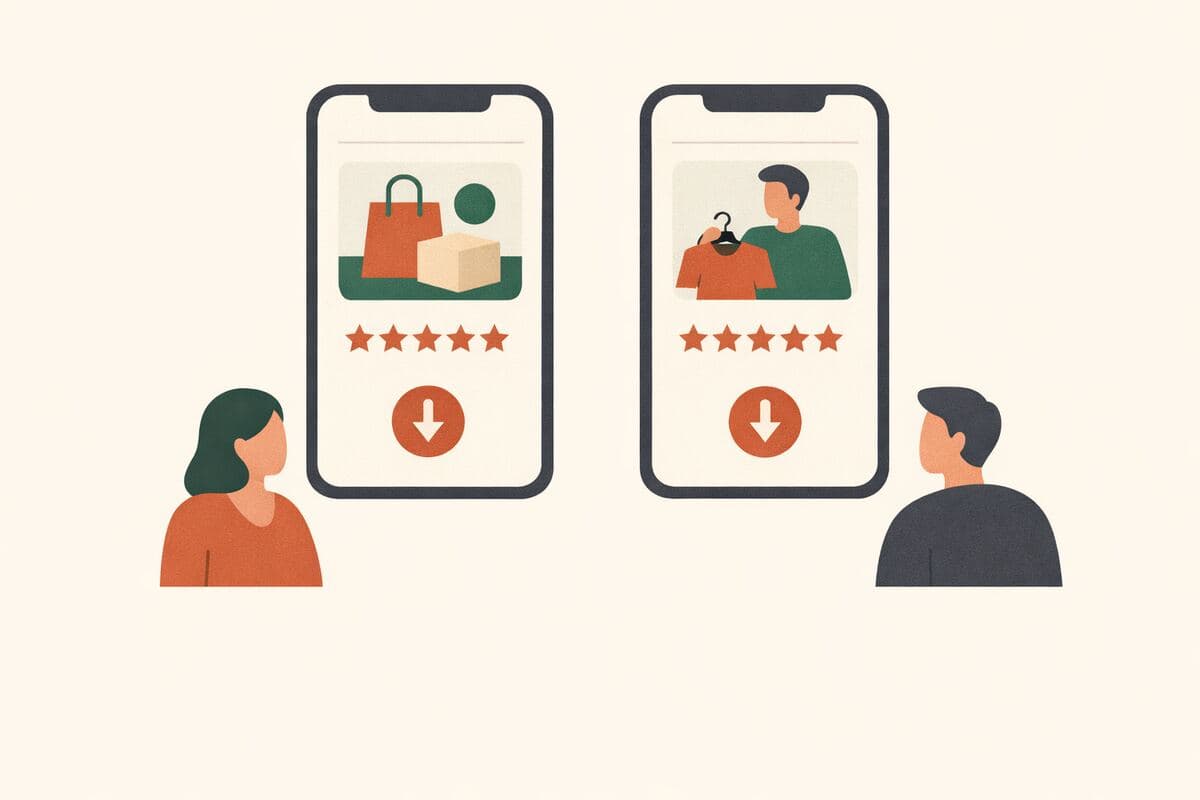
Evaluates two app store listing variants on clarity, appeal, trust, and conversion intent to identify the higher-performing concept. Designed for respondents who have recently browsed or installed apps.
No sign-up to try · Unlimited responses on the free plan
Pick one
Powered by QuestionPunk
Default theme. Colors and fonts are yours to change.
A preview of what’s in the template. Every question is editable before you launch.
Adaptive probes on open-ended answers that pull out detail a static form would miss.
Built-in safeguards against rushed answers and low-quality respondents.
Wording, ordering, and branching written by the AI — tuned to your research goal.
Themes, quotes, and a plain-English summary write themselves once responses come in.
We reviewed the closest templates from other survey tools. Here’s what they do well — and where this template goes further.
A generic, drag-and-drop concept testing form rather than one built for app store listing comparisons specifically. Useful as a fielding-ready starting point but requires manual customization to structure an A/B concept comparison like ours. No mention of adaptive questioning or automated scoring.
Focused on testing new service concepts rather than app store listings, so the structure and question wording would need substantial reworking for this use case. It offers the standard concept-test metrics (appeal, clarity, purchase intent) but in a services context, not a two-variant app listing comparison.
A conversational-style static template for general concept testing, not specific to app store A/B comparisons. It benefits from SurveySparrow's chat-like UI but relies on fixed question sequences rather than dynamic probing.
A polished, conversational product concept testing form, well-suited to general product feedback but not built around comparing two named app store listing variants. It relies on Typeform's standard one-question-at-a-time flow rather than any adaptive interviewing.
The template includes 23 ready-to-use questions, starting with: “In the last 3 months, have you installed a new app or signed up for a new online service?” · “In one sentence, what does Concept A offer?” · “How clear is Concept A at a glance?”. The full set is previewed above, and every question is editable.
Respondents typically finish the 23 questions in about 12 minutes.
Yes — every question, answer option, and the ordering is editable before you launch. You can add or remove questions, or ask the AI editor to rework the survey around your research goal.
Yes. Open it in the editor and start customizing right away — no account required to try it, and the free plan covers launching your survey.
Open this template in the editor. Every part is yours to change before the first respondent sees it.
More studies on similar topics.