메시지
모든 템플릿Market Research
브랜드 개성 의미 미분 척도
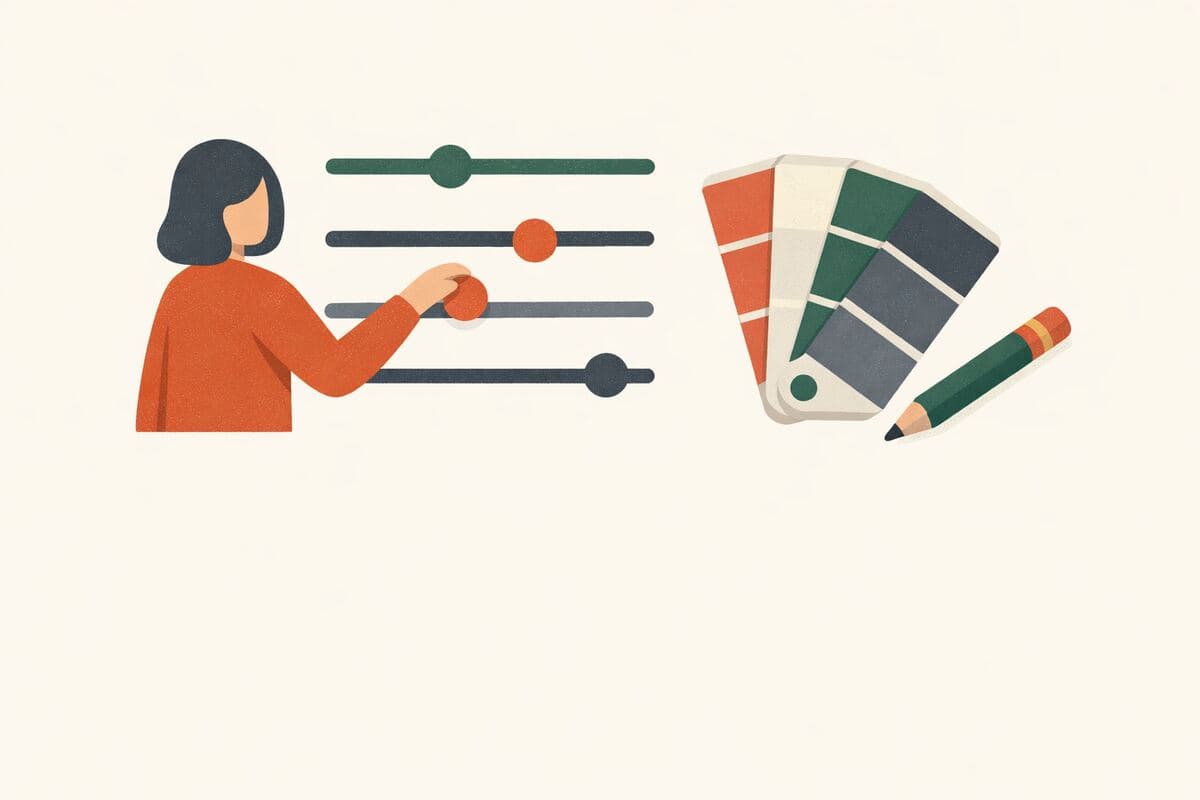
브랜드의 개성을 전통적 대 혁신적, 기업적 대 인간적, 프리미엄 대 합리적 가격 등 고전적인 의미 미분(semantic differential) 척도 위에 매핑하고 경쟁사와 비교해 보십시오. AI 인터뷰어가 평가 이면의 연상을 파고들어, 그 인식이 어디에서 비롯되는지를 파악하게 해 줍니다.
가입 없이 체험 · 무료 요금제도 응답 무제한
실시간 미리보기
브랜드 개성 의미 미분 척도
이것은 인상에 관한 연구이며, 정답이나 오답은 없습니다. 귀하의 응답은 완전히 비밀이 보장되며 익명으로 처리됩니다. 직감에 따라 반대되는 단어 쌍 사이에 브랜드를 배치하신 다음, 그 이유에 대해 이야기 나누게 됩니다. 약 5분 소요됩니다.
Powered by QuestionPunk
기본 테마. 색상과 글꼴은 자유롭게 바꿀 수 있습니다.
샘플 질문
템플릿에 포함된 내용을 미리 확인해 보세요. 모든 질문은 설문 공개 전에 자유롭게 수정할 수 있습니다.
질문 6개 · 약 5분
Q01
객관식필수
이 브랜드에 대해 얼마나 잘 알고 계십니까?
- 현재 이용 중인 고객입니다
- 과거에 이용한 적이 있습니다
- 알고는 있지만 이용해 본 적은 없습니다
- 방금 처음 들어 봤습니다
Q02
슬라이더 매트릭스필수
이 브랜드는 각 반대말 쌍 사이에서 어디에 위치합니까? (왼쪽 = 첫 번째 단어, 오른쪽 = 두 번째 단어.)
7개 행, 각 행마다 슬라이더 1개
- 전통적 ↔ 혁신적
- 기업적 ↔ 인간적
- 복잡한 ↔ 단순한
- 합리적 가격 ↔ 프리미엄
- 틈새 ↔ 대중적
- 외 2개
슬라이더 0–10최소:첫 번째 단어최대:두 번째 단어
Q03
단문형필수
이 브랜드가 파티에 온 한 사람이라면, 한 문장으로 어떻게 묘사하시겠습니까?
Q04
드롭다운
다음 브랜드 중 개성 면에서 가장 비슷하게 느껴지는 것은 무엇입니까?
- 가장 잘 알려진 업계 선두 브랜드
- 새롭게 떠오르는 신생 브랜드
- 저가 브랜드 또는 유통업체 자체 브랜드
- 해당 없음
Q05
의견 척도필수
비슷한 필요를 가진 사람에게 이 브랜드를 추천할 의향이 얼마나 있으십니까?
척도: 0 – 10
최소:전혀 그렇지 않다최대:매우 그렇다
Q06
AI 인터뷰
브랜드 인상이 어디에서 비롯되는지 탐색하십시오: 가장 극단적인 평가 이면에 있는 구체적인 접점이나 기억, 어느 쌍을 배치하기가 가장 어려웠고 그 이유는 무엇인지, '파티에 온 사람' 묘사가 브랜드에 대한 실제 경험과 어떻게 연결되는지, 그리고 선택한 한 가지 차원(예: 기업적에서 인간적 쪽으로)을 움직이려면 브랜드가 무엇을 해야 하는지를 물어보십시오.
메시지
감사합니다! 귀하의 배치는 브랜드의 개성 프로필을 만들어 내며, 인터뷰는 어떤 경험이 그것을 형성했는지를 설명해 줍니다.
포함된 기능
AI 후속 질문
정형화된 설문이 놓치는 세부 내용을, 주관식 답변에 맞춰 AI가 심층 질문으로 끌어냅니다.
주의력 확인 장치
성의 없는 답변과 저품질 응답자를 걸러내는 내장 안전장치입니다.
AI가 작성한 문안
문구, 질문 순서, 분기 로직까지 AI가 연구 목표에 맞춰 작성합니다.
자동 리포트
응답이 모이면 주요 주제, 인용문, 이해하기 쉬운 요약이 자동으로 작성됩니다.
다른 서비스와 비교
다른 설문 도구의 가장 유사한 템플릿을 검토했습니다. 그 도구들이 잘하는 점과, 이 템플릿이 한발 더 나아가는 지점을 정리했습니다.
이 템플릿을 선택하는 이유
- Classic semantic differential pairs on smooth sliders, plus a projective 'person at a party' question that surfaces associations scales miss
- The AI interview traces each extreme rating to the actual touchpoint that created it — the part brand trackers never explain
- Competitor-similarity and recommend items make the profile comparable and actionable
- Familiarity screening separates customer perception from bystander perception
Jotform
Semantic Differential Survey Form TemplateThe most on-the-nose semantic-differential template of the set: it centers on an 'Adjective Pair Ratings Matrix' asking respondents to rate a subject across contrasting adjective pairs, plus overall satisfaction, ease-of-use, and recommend scales. Fully editable in a no-code builder with conditional logic, but the bipolar matrix is a static grid with no probing of why a brand skews to one pole.
잘하는 점
- Purpose-built adjective-pair matrix that is exactly the semantic-differential (bipolar scale) format
- Combines Scale Rating, Matrix, and Star Rating field types plus an open-ended comment box for qualitative color
- No-code builder lets users adjust the rating scale, reword adjective pairs, and add conditional logic
- Includes overall impression, ease-of-use, and likelihood-to-recommend items alongside the matrix
아쉬운 점
- Bipolar matrix is a fixed grid with no adaptive follow-up asking why the brand pulls toward a given adjective
- Adjective pairs must be hand-authored; no methodology guidance on which brand-personality dimensions to test
- Single open comment box rather than an AI-moderated qualitative interview
- No automated report translating the differential scores into a brand-positioning narrative
Qualtrics
Brand Perception Study SolutionEnterprise, PhD-designed brand-perception solution with prebuilt survey logic, a recommended ~300-respondent sample, respondent sourcing, and auto-generated charts/PDF reports. Measures tangible and intangible brand associations relative to competitors and mixes quantitative attribute ratings with open-ended 'why' questions. Powerful and methodologically credible, but gated behind a Research Core license and English-only.
잘하는 점
- PhD-designed methodology with prebuilt logic, structure, and recommended sample size (~300)
- Explicitly competitive: measures brand associations relative to competitors
- Bundled respondent sourcing plus prebuilt reports, expert-designed charts, and shareable PDF output
- Blends quantitative attribute assessment with open-ended questions for the source of perceptions
아쉬운 점
- Requires a Research Core 3 license and is English-only; heavy setup vs. a self-serve template
- Open-ended 'why' questions are one-shot, not an adaptive AI interview that probes each association
- Uses attribute batteries rather than a true bipolar semantic-differential scale
- Methodology is proprietary and not exposed as an editable, transparent prompt
Attest
15 Brand perception survey questions and examples (+ template)A downloadable brand-perception template plus a walkthrough of 15 sample questions spanning associations, emotional response, positioning, pricing perception, advertising, and top-of-mind recall. Uses a mix of single/multiple choice, ranking, scales, open text, and NPS. Strong on breadth of brand dimensions and best-practice guidance, but a conventional static questionnaire with no adaptive depth.
잘하는 점
- Broad, well-organized coverage: brand associations, emotional traits, positioning, pricing perception, advertising, and top-of-mind recall
- Mixes six question formats (single/multiple choice, ranking, scales, open text, NPS) to keep respondents engaged
- Concrete best-practice guidance (keep to 10-12 questions, include don't-know/N/A, pre-test with reviewers)
- Downloadable, five-minute template designed for quick fielding
아쉬운 점
- Open-text items are single-shot; no AI follow-up to probe an emotional association or negative experience
- Not a bipolar semantic-differential instrument despite covering brand traits
- No native constant-sum to force trade-offs among brand attributes or price tiers
- No auto-generated brand report; interpretation is left to the user
QuestionPro
Semantic Differential Survey TemplateA true semantic differential template — multi-point bipolar ratings of a product, company, or brand. Methodologically on-target; what it lacks is any probe into where the perceptions come from.
잘하는 점
- Correct bipolar multi-point semantic differential structure
- Curated by a specialist research platform and customizable
- Free to use with QuestionPro's reporting
아쉬운 점
- No exploration of which experiences created each rating
- Static scales only — no projective or open follow-up built in
- No competitor-comparison framing in the template itself
자주 묻는 질문
“브랜드 개성 의미 미분 척도” 템플릿에는 어떤 질문이 포함되어 있나요?
바로 사용할 수 있는 질문 6개가 포함되어 있으며, 처음 질문은 다음과 같습니다: “이 브랜드에 대해 얼마나 잘 알고 계십니까?” · “이 브랜드는 각 반대말 쌍 사이에서 어디에 위치합니까? (왼쪽 = 첫 번째 단어, 오른쪽 = 두 번째 단어.)” · “이 브랜드가 파티에 온 한 사람이라면, 한 문장으로 어떻게 묘사하시겠습니까?”. 전체 질문은 위에서 미리 볼 수 있고 모두 수정 가능합니다.
이 설문을 완료하는 데 얼마나 걸리나요?
응답자는 보통 질문 6개를 약 5분 안에 완료합니다.
템플릿을 수정할 수 있나요?
네. 설문을 공개하기 전에 모든 질문, 답변 옵션, 순서를 자유롭게 수정할 수 있습니다. 질문을 추가·삭제하거나 AI 편집기에 연구 목표에 맞춘 재구성을 요청할 수도 있습니다.
이 템플릿은 무료인가요?
네. 편집기에서 바로 열어 수정을 시작할 수 있습니다. 체험에는 계정이 필요 없으며, 무료 플랜으로 설문을 공개할 수 있습니다.
설문을 공개할 준비가 되셨나요?
이 템플릿을 편집기에서 열어 보세요. 첫 응답자가 보기 전에 모든 부분을 원하는 대로 바꿀 수 있습니다.
관련 템플릿
비슷한 주제의 다른 설문을 만나 보세요.